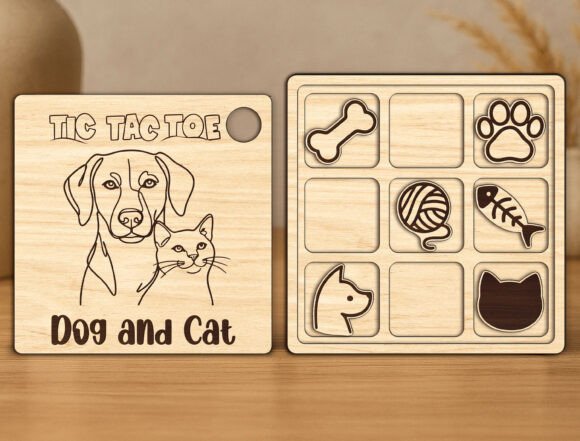
Dog and Cat Tic Tac Toe Laser Game
Creating a tactile, engaging experience for pets and their owners is a unique challenge that blends design precision with playful functionality. The Dog and Cat Tic Tac Toe Laser Game represents more than just a digital file; it is a blueprint for crafting an interactive toy that bridges the gap between traditional board games and modern pet enrichment. For makers, designers, and small business owners, this project offers a perfect entry point into the world of laser-cut merchandise. It combines the universal appeal of classic strategy with the specific needs of animal companions, resulting in a product that is both visually striking and practically useful.
The Intersection of Play and Precision
At its core, this game transforms the abstract concept of a grid into a physical object that cats can bat at and dogs can nudge. Unlike standard wooden blocks, a laser-cut version allows for intricate details, such as paw prints or stylized animal silhouettes, which add character to every piece. The design leverages the capabilities of laser cutting machines to produce clean edges and consistent dimensions, ensuring that the game pieces fit snugly within the grid slots. This level of precision is crucial for durability, especially when the game will be subjected to enthusiastic play.
What makes the Dog and Cat Tic Tac Toe Laser Game particularly interesting is its dual nature. It serves as a standalone toy for pets but also functions as a social activity for owners. Imagine a scenario where a cat owner plays against their feline companion, using the laser-cut markers to engage the animal's natural hunting instincts. For dog owners, the larger scale often required for canine interaction can be easily adjusted by scaling the vector files, making the game adaptable to different breeds and sizes. This versatility is a significant selling point for creators looking to expand their product lines.
Technical Execution and File Formats
Success in bringing this design to life depends heavily on understanding the technical requirements of your equipment. The provided package includes a comprehensive set of files: SVG, EPS, PDF, DXF, and PNG formats. Each serves a distinct purpose in the workflow. While SVG files are excellent for general use in many vector editors, users of Lightburn software should exercise caution. Lightburn can sometimes introduce slight distortions in SVG dimensions due to how it interprets coordinate systems. To maintain absolute precision, it is highly recommended to utilize the DXF format when working within Lightburn. This ensures that the cut lines align perfectly with the intended design, preventing gaps or overlaps that could compromise the game's structural integrity.
The cutting and engraving guide included in the documentation simplifies the setup process. Typically, red lines indicate where the laser should cut through the material, while black lines designate areas for engraving. Adhering to these color codes streamlines the production workflow, reducing the time spent on manual adjustments. Before committing to a full production run, always perform a test cut on a scrap piece of material. This step verifies that your power settings, speed, and focus are optimized for the specific wood or acrylic you intend to use.
Creative Applications and Customization
The true potential of the Dog and Cat Tic Tac Toe Laser Game lies in its adaptability. Designers are not limited to the default appearance; they can reinterpret the aesthetic to match various themes or brand identities. For instance, educators might modify the engravings to include letters or numbers, turning the game into an educational tool for young children learning to recognize shapes while playing with their pets. Small business owners can customize the packaging and branding, creating a premium gift item for pet lovers during holiday seasons.
Consider the material choices as another avenue for creativity. Birch plywood offers a warm, natural look that appeals to eco-conscious consumers, while colored acrylics can provide a vibrant, modern twist. Engraving patterns onto the game board, such as a subtle texture or a decorative border, adds value without significantly increasing production time. These enhancements transform a simple game into a collectible item. Furthermore, the ability to adjust the size of the game pieces allows creators to target specific niches. A smaller version might be ideal for apartment-dwelling cat owners, whereas a robust, oversized edition could cater to large breed dogs.
Strategic Marketing for Makers
When marketing this product, focus on the story behind the creation. Highlight the craftsmanship involved in laser cutting and the thoughtful design that considers the behavior of both dogs and cats. Use high-quality images that showcase the finished product in action—perhaps a photo of a curious cat batting at a game piece or a happy dog waiting for its turn. These visual narratives resonate deeply with the target audience of adults aged 20 to 50, who value authenticity and quality in the products they purchase.
Entrepreneurs can also leverage the downloadable nature of the files. Offering the design as a digital download empowers other makers to produce the game themselves, fostering a community of creators. This approach expands reach without the overhead of inventory management. Additionally, providing clear instructions and support builds trust. If a customer encounters issues with file compatibility or needs a custom PNG size, offering prompt assistance demonstrates reliability and professionalism. This commitment to customer service is a key component of building a reputable brand in the competitive maker economy.
Ensuring Quality and Consistency
Maintaining consistency across multiple units is essential for any serious creator. Variations in cut depth or engraving clarity can detract from the perceived quality of the final product. Regular calibration of the laser machine is necessary to ensure that every batch meets the same high standards. Pay close attention to the kerf—the width of material removed by the laser—as this can affect how tightly the game pieces fit into the board. Adjusting the design slightly to account for kerf ensures a smooth user experience.
Organization is equally important when managing digital assets. Keep your ZIP archives well-structured, separating the different file types clearly so that customers can easily find what they need. Labeling files descriptively helps prevent confusion, especially when dealing with multiple versions or updates. By presenting a professional, organized front, you signal to your audience that you take your craft seriously. This attention to detail extends beyond the physical product to the entire customer journey, from the initial download to the final assembly.
Future Possibilities and Community Engagement
The landscape of DIY and maker projects is constantly evolving, and staying updated with new trends is vital. Following industry leaders and participating in online communities can provide fresh inspiration for future releases. The Dog and Cat Tic Tac Toe Laser Game is just one example of how digital designs can be transformed into tangible joy. As technology advances, new materials and techniques will emerge, offering even more opportunities for innovation.
Engaging with your audience fosters a sense of community and provides valuable feedback. Encourage customers to share photos of their completed projects and offer suggestions for improvements. This two-way communication not only strengthens brand loyalty but also informs future design decisions. Whether you are a hobbyist looking for a fun weekend project or an entrepreneur building a sustainable business, the principles of creativity, precision, and user-centric design remain constant. By embracing these values, you can create products that truly matter to people and their pets.