Bro Code Challenge Laser Cut SVG
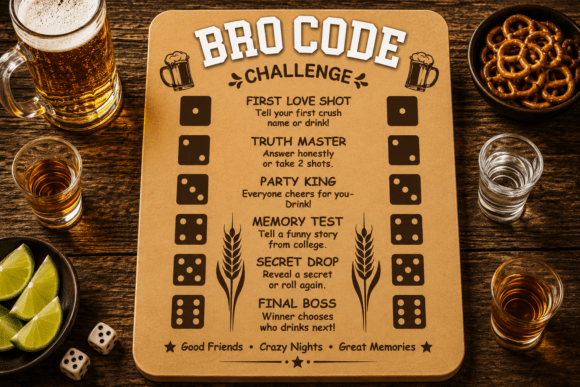
Game nights often suffer from the same old routine: board games that take too long to explain, card decks that get lost in shuffle, or digital apps that pull everyone's attention away from the room. The Bro Code Challenge Laser Cut SVG solves this by offering a tangible, interactive experience that centers on connection and laughter. This digital design file is not just a pattern; it is the blueprint for a custom-built drinking game board that transforms plywood, MDF, or acrylic into a centerpiece for any gathering. By combining dice rolls with handwritten-style dares, this project bridges the gap between traditional craftsmanship and modern party culture.
Designing the Ultimate Interactive Game Board
The core appeal of this laser-cut project lies in its layered complexity and functional layout. Unlike flat stickers or simple printed signs, the Bro Code Challenge design utilizes depth to create visual interest. The title is typically cut in multiple layers, allowing you to stack different materials or colors to make the words pop off the surface. Beneath the title, the board features an engraved grid where each cell contains a specific challenge, dare, or rule.
When you load the SVG file into your cutting software, you are looking at a vector-based system designed for precision. The lines are optimized to ensure clean cuts on various materials, whether you are using a Glowforge, a CO2 laser cutter, or a CNC machine. The engraving settings within the file allow for crisp text that remains legible even after years of use. This durability is crucial for a game board that will see frequent handling, rolling of dice, and perhaps the occasional spill.
Material Selection and Aesthetic Choices
One of the most exciting aspects of working with the Bro Code Challenge Laser Cut SVG is the freedom to choose your medium. Each material offers a distinct look and feel, allowing you to tailor the final product to your specific audience or venue.
- Birch Plywood: This is the classic choice for a rustic, man-cave aesthetic. The natural grain adds warmth, and the light color provides excellent contrast for dark laser engravings. It is affordable, sturdy, and easy to work with.
- MDF (Medium Density Fiberboard): If you plan to paint the board, MDF is superior. Its smooth, non-porous surface accepts paint evenly without showing wood grain. You can create a bold, graphic look with bright colors that match a specific party theme.
- Acrylic: For a modern, sleek vibe, transparent or colored acrylic works wonders. Layering clear acrylic over a colored base creates a glowing effect when backlit, perfect for home bars or high-end bachelor parties.
- Bamboo: A sustainable option that offers a harder surface and a unique striped grain pattern. It feels premium under the fingers and stands up well to heavy wear.
Applications Beyond the Standard Party
While the primary function of this design is as a drinking game, its utility extends far beyond a single night of celebration. The structured format of challenges and rewards makes it adaptable for various social contexts. Creators and small business owners can repurpose the concept for team-building events, corporate retreats, or community gatherings where icebreakers are essential.
Consider the bachelor party scenario. Instead of buying a generic plastic game, a groom can present his friends with a custom-engraved board made from high-quality walnut or oak. This elevates the gift from a disposable novelty to a keepsake. The board becomes a symbol of the friendship group, something they can keep in their own homes or pass around for future reunions. The act of building the board together—cutting, sanding, and assembling—can even be part of the pre-party bonding activity.
For college reunions, the Bro Code Challenge serves as a nostalgic anchor. You can customize the SVG file slightly before cutting to include inside jokes, year-specific references, or names of classmates who couldn't make it. This personalization turns a standard game into a storytelling device. The physical nature of the board encourages people to put down their phones and engage face-to-face, fostering genuine conversation rather than scrolling through social media feeds.
Customizing Challenges for Your Audience
The true power of having the source files—SVG, PDF, AI, and PNG—is the ability to edit the content. The default challenges provided in the design are hilarious and generally safe for most groups, but every crowd has a different tolerance level. As a designer or host, you have the opportunity to curate the experience.
If you are hosting a mixed group with varying comfort levels, you might soften the "drinking" aspect and turn it into a "truth or dare" style game where the penalty is a funny task rather than a shot. Conversely, for a dedicated bachelor party, you can ramp up the intensity with more daring physical challenges or competitive drinking rounds. The vector format allows you to select individual text elements and rewrite them in Illustrator or Inkscape without affecting the rest of the layout.
This flexibility also applies to the rules themselves. You can add a section for "House Rules" that are specific to your group's history. Perhaps there is a legendary story about a specific friend that needs to be immortalized on the board. By editing the text layer, you create a narrative artifact that belongs uniquely to your circle of friends.
Practical Execution and Assembly Tips
To ensure the final product looks professional and functions smoothly, attention to detail during the production phase is key. When setting up your laser cutter, always perform a test square on your chosen material. Different batches of wood or thicknesses of acrylic may require adjustments to power and speed settings. The goal is to cut through cleanly without burning the edges excessively, which can mar the aesthetic of the final piece.
For the layered title effect, alignment is critical. Use registration marks if your software supports them, or create a simple jig to hold the pieces in place while gluing. A thin layer of contact cement or wood glue works best for bonding the layers. Once assembled, a light sanding of the edges removes any roughness left by the laser, ensuring the board is pleasant to touch.
Finishing the board protects it from moisture and wear. For wood projects, a food-safe oil like mineral oil or tung oil enhances the grain and provides a water-resistant barrier. For painted MDF, a clear polyurethane topcoat adds durability. If you are using acrylic, simply cleaning the surface with a microfiber cloth is usually sufficient, though UV-protective coatings can prevent yellowing over time.
File Formats and Workflow Integration
The package includes multiple file formats to accommodate different workflows. The SVG file is the industry standard for vector graphics and is compatible with most laser cutting software like LightBurn, RDWorks, and Glowforge Design Studio. It ensures that lines remain sharp regardless of how much you scale the design.
The PDF version is useful for quick reference or if you prefer to print a template for manual assembly, though laser cutting is recommended for precision. The AI (Adobe Illustrator) file is essential for those who want to deeply customize the design, allowing for full access to layers, fonts, and shapes. Finally, the PNG image serves as a preview or can be used for marketing materials if you are selling these boards as personalized gifts.
By mastering the workflow from digital file to physical object, you unlock a new avenue for creative expression. Whether you are a hobbyist looking to impress friends or an entrepreneur seeking a niche product for your shop, the Bro Code Challenge Laser Cut SVG provides a robust foundation. It combines the satisfaction of making something with your hands with the joy of creating memorable moments with others. Start your next project today, and watch as a simple sheet of wood transforms into the heart of your next great party.