Backgammon Game Board Game Svg: A Practical Guide for Makers and Enthusiasts
The resurgence of tabletop gaming has sparked a parallel interest in custom manufacturing, where digital design files serve as the bridge between concept and physical object. Among these, the Backgammon Game, Board Game Svg file format has emerged as a critical resource for hobbyists and small-scale producers. Unlike purchasing a pre-finished board, acquiring a vector template allows for complete control over materials, dimensions, and aesthetic details. This approach transforms the traditional backgammon experience into a personalized project, blending classic strategy with modern fabrication technology.
For adults aged 20 to 50 who are evaluating how to create high-quality game boards, understanding the nuances of digital templates is essential. These files are not merely images; they are precise instructions for laser cutters, CNC routers, and similar machinery. By analyzing the specific attributes of a Backgammon Game, Board Game Svg, creators can determine if this method aligns with their technical capabilities and desired outcomes compared to buying ready-made alternatives or using other design formats.
Understanding the Digital Blueprint
A Backgammon Game, Board Game Svg is fundamentally a vector graphic designed specifically for precision cutting. The term "SVG" stands for Scalable Vector Graphics, a format that defines shapes using mathematical coordinates rather than pixels. This distinction is vital when working with machines like Glowforge, Cricut, or industrial laser cutters. Because the lines are defined mathematically, the design remains crisp at any scale, ensuring that the intricate points of the backgammon board and the detailed checker pieces do not lose resolution during the cutting process.
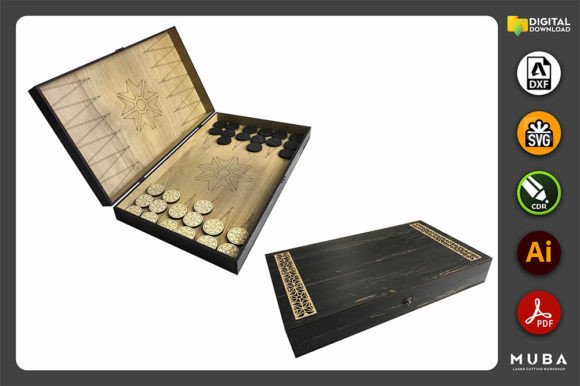
This digital file is distinct from raster images (like JPEGs or PNGs) which would blur or pixelate when scaled up. For a project requiring tight tolerances—such as fitting checkers into triangular points on a board—the accuracy of an SVG is non-negotiable. The typical package includes multiple formats such as DXF, CDR, AI, and PDF, providing compatibility across various software ecosystems. Whether you use Adobe Illustrator, CorelDRAW, or open-source alternatives like Inkscape, having these versatile options ensures that the workflow remains smooth regardless of your preferred design tool.
It is crucial to remember that purchasing this type of file involves acquiring a digital asset only. No physical product will be shipped. The value lies entirely in the ability to reproduce the design using your own equipment. This shifts the burden of production onto the user, requiring access to a laser cutter or CNC machine and the raw materials necessary to bring the design to life.
Material Selection and Dimensional Considerations
One of the primary advantages of using a Backgammon Game, Board Game Svg is the flexibility it offers regarding material choice. The standard design typically fits a 3mm thickness plywood, but the vector nature of the file allows for adaptation to MDF, acrylic, plexiglass, or even metal sheets, provided the cutting parameters are adjusted accordingly. Each material presents unique strengths and tradeoffs that influence the final product's durability, weight, and visual appeal.
- Plywood: Often the most popular choice for its balance of cost and workability. It offers a warm, natural aesthetic that suits traditional game rooms. However, the grain can sometimes interfere with very fine details, and edges may require sanding after cutting.
- MDF (Medium-Density Fiberboard): Provides a smooth, uniform surface ideal for painting. Since there is no wood grain, painted designs appear cleaner. However, MDF produces more dust during cutting and can be heavier than plywood.
- Acrylic and Plexiglass: These materials offer a modern, translucent look. They are excellent for creating layered effects or backlit boards. The tradeoff is that acrylic requires different laser settings to prevent melting rather than vaporizing, and it can be more expensive than wood-based options.
The standard dimensions for many of these templates are approximately 25.5 x 46 x 6.5 cm. While these measurements are suitable for a standard playing table, the scalability of the SVG format means users can resize the board. However, resizing requires careful consideration. If the design is enlarged significantly, the thinness of the elements—such as the legs of the board or the delicate edges of the checkers—must be evaluated. Thinner elements become fragile and prone to breakage during handling or gameplay. Conversely, shrinking the design too much can cause parts to jam or fail to fit together properly.
Comparing Vector Templates to Ready-Made Boards
When deciding between a DIY approach using a Backgammon Game, Board Game Svg and purchasing a commercially manufactured board, several factors come into play. Ready-made boards offer immediate gratification; they arrive fully assembled, often with high-quality finishes and felt linings. They are the logical choice for those who lack access to laser cutting equipment or the time to dedicate to a multi-step assembly process.
In contrast, the digital template route appeals to makers who value customization. With a store-bought board, you are limited to the colors, sizes, and styles the manufacturer offers. Using a vector file, you can modify the design before cutting. You might change the font of the numbers, alter the shape of the checkers, or adjust the board's thickness to match specific furniture aesthetics. Furthermore, the cost per unit can be lower when producing in bulk, making it a viable option for small businesses looking to sell custom game sets.
However, the tradeoff is significant. The DIY method demands a higher skill level. Users must understand laser safety, material properties, and post-processing techniques like sanding, gluing, and painting. The instruction note to paint parts before gluing is a critical piece of advice that highlights the complexity of the process. Painting after assembly can lead to trapped glue lines or uneven coverage, whereas pre-painting ensures a professional finish but requires meticulous masking and handling of small parts.
Evaluating File Formats and Software Compatibility
The versatility of the Backgammon Game, Board Game Svg package extends to the variety of file formats included: DXF, SVG, CDR, AI, and PDF. Each format serves a specific purpose within the maker ecosystem. SVG and DXF are generally the most universal, supported by almost all laser cutting software and web-based design tools. They are ideal for users who want a straightforward path from download to cut.
AI (Adobe Illustrator) and CDR (CorelDRAW) files are native formats for professional design software. These are beneficial for users who intend to make substantial modifications to the original design, such as adding logos, changing text, or integrating the backgammon board into a larger furniture piece. Having the editable source files empowers the creator to tailor the project precisely to their needs.
PDF files serve as a reliable backup, often used for viewing the layout or printing reference guides, though they are less commonly used directly for laser cutting unless converted back to vector data. The inclusion of multiple formats reduces friction in the workflow, ensuring that the project is not halted by software incompatibility issues. This comprehensive approach reflects a deep understanding of the diverse tools available to modern makers.
Best Use Cases and Decision Factors
Determining whether a Backgammon Game, Board Game Svg is the right choice depends largely on your goals and resources. This approach is best suited for individuals who already own a laser cutter or CNC machine and have a basic understanding of woodworking or plastic fabrication. It is also an excellent option for educational settings, where students can learn about geometry, engineering, and design through the tangible process of creating a functional game.
For those seeking a unique gift or a one-of-a-kind piece for their home, the customization potential makes the digital file superior to mass-produced items. You can select exotic woods, combine materials for a two-tone effect, or incorporate personal monograms. The ability to control every aspect of the build ensures the final product matches your exact vision.
However, if you do not have access to cutting equipment or lack the patience for assembly, the investment in a digital file may not yield results. The learning curve associated with setting up laser parameters, managing material warping, and assembling dozens of small pieces can be steep. In such cases, purchasing a finished board or hiring a local maker to produce the item using your design might be a more practical alternative.
Practical Assembly and Finishing Tips
Once the cutting phase is complete, the assembly process becomes the focus. The design typically consists of interlocking parts that require glue to hold them together securely. As noted in the guidelines, gluing should occur before final assembly, and painting should be done prior to gluing. This sequence prevents adhesive residue from showing on the visible surfaces and ensures that paint penetrates the joints evenly.
For plywood projects, sanding the edges is often necessary to remove char marks left by the laser. Acrylic pieces may require polishing to clear the edges. Attention to detail during these finishing stages significantly impacts the perceived quality of the final game. A well-sanded, smoothly painted board feels premium and durable, while a rushed job may result in sharp edges or uneven coloring that detracts from the playing experience.
Ultimately, the Backgammon Game, Board Game Svg represents a powerful tool for those willing to engage in the creative process. It bridges the gap between digital design and physical reality, offering a level of personalization that commercial products cannot match. By weighing the benefits of customization against the requirements of equipment and skill, enthusiasts can make an informed decision that leads to a rewarding and high-quality end product.